lighting a yacht interior
Why It's an Architecture Decision, Not a Fixture Choice
Rule 06 in the studio’s own published design philosophy states it plainly: lighting has evolved from a finishing layer into a primary spatial tool. Worth unpacking what that actually means in practice, because the phrase is easy to nod along with and easy to under-implement.
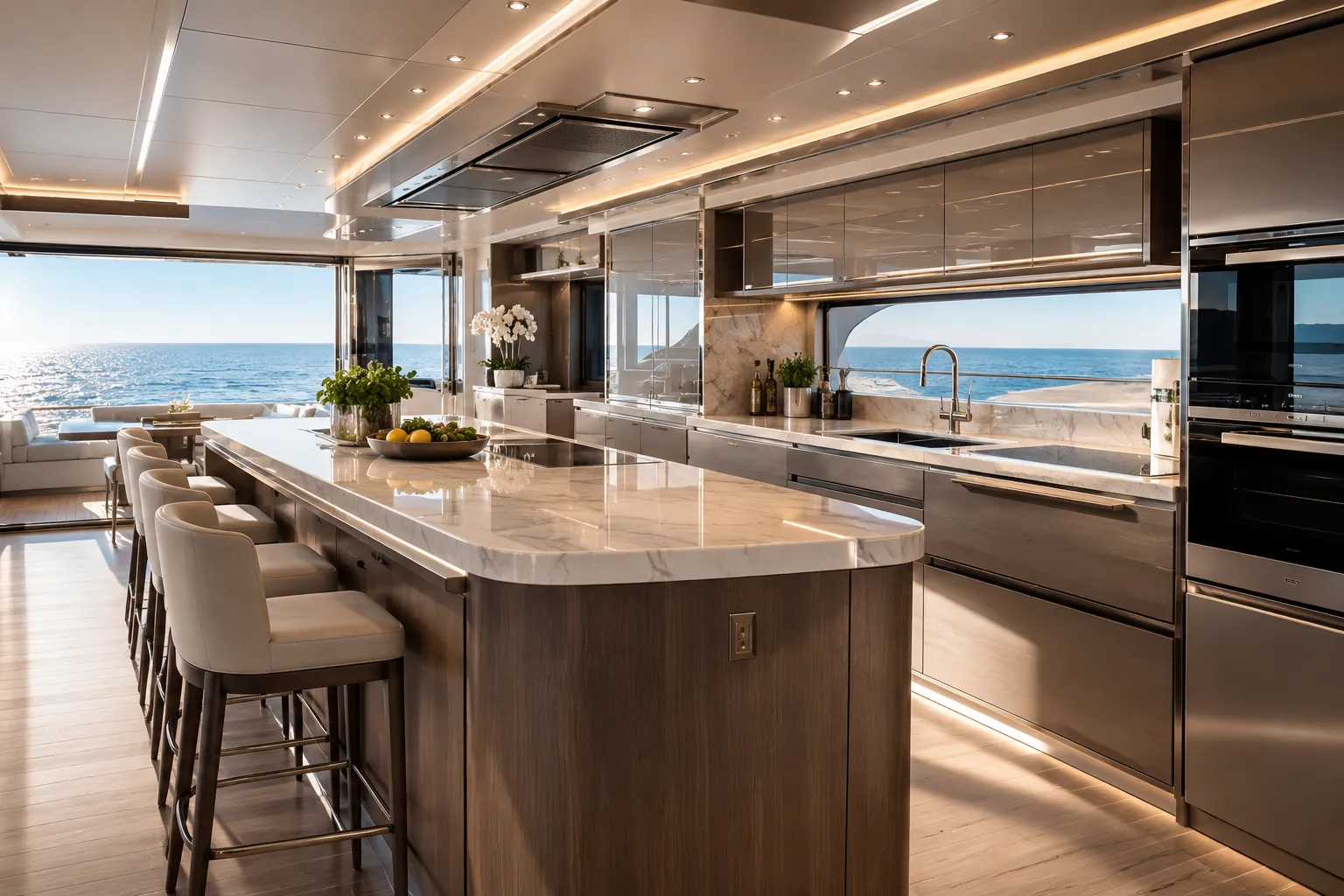
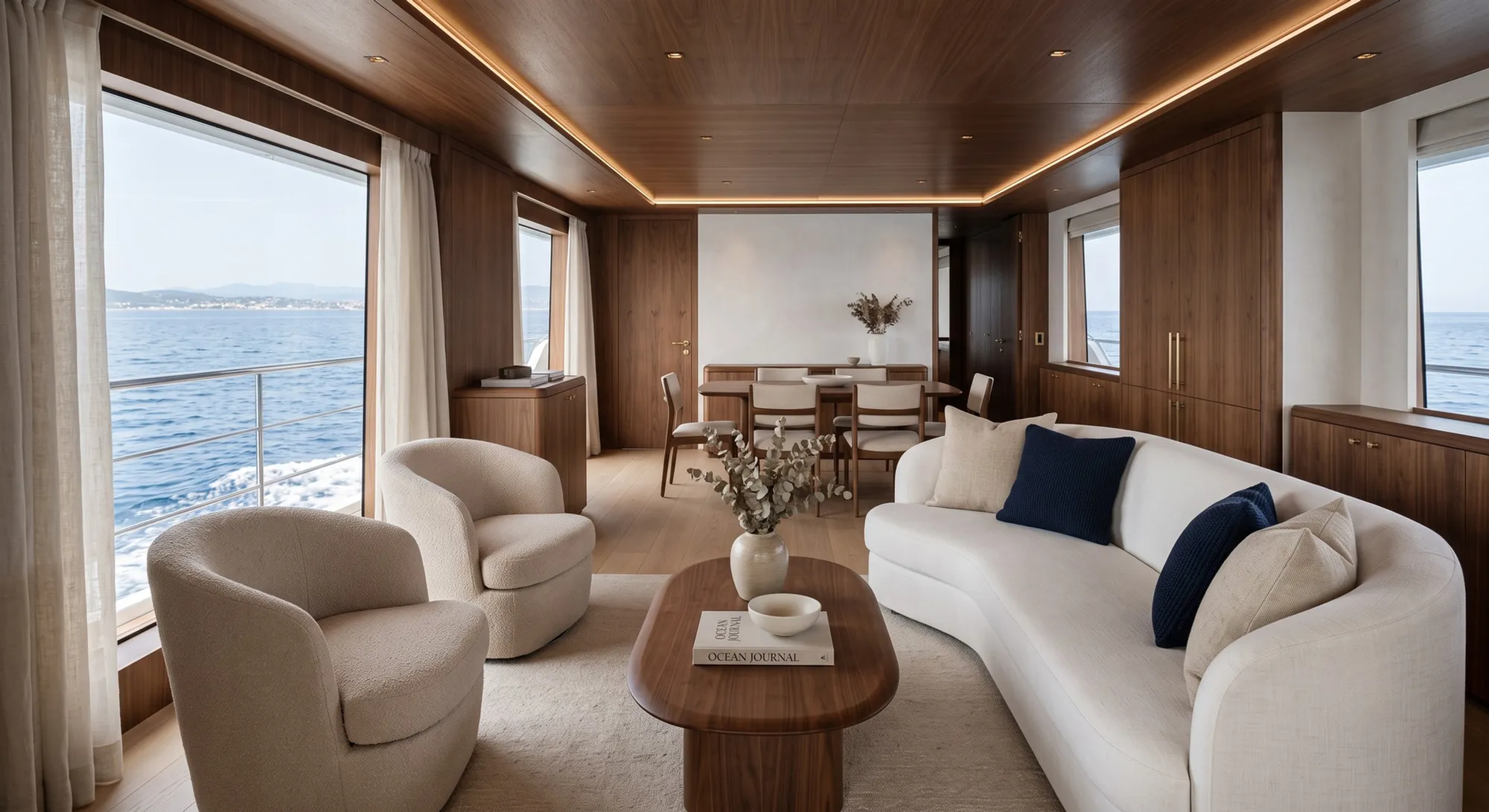
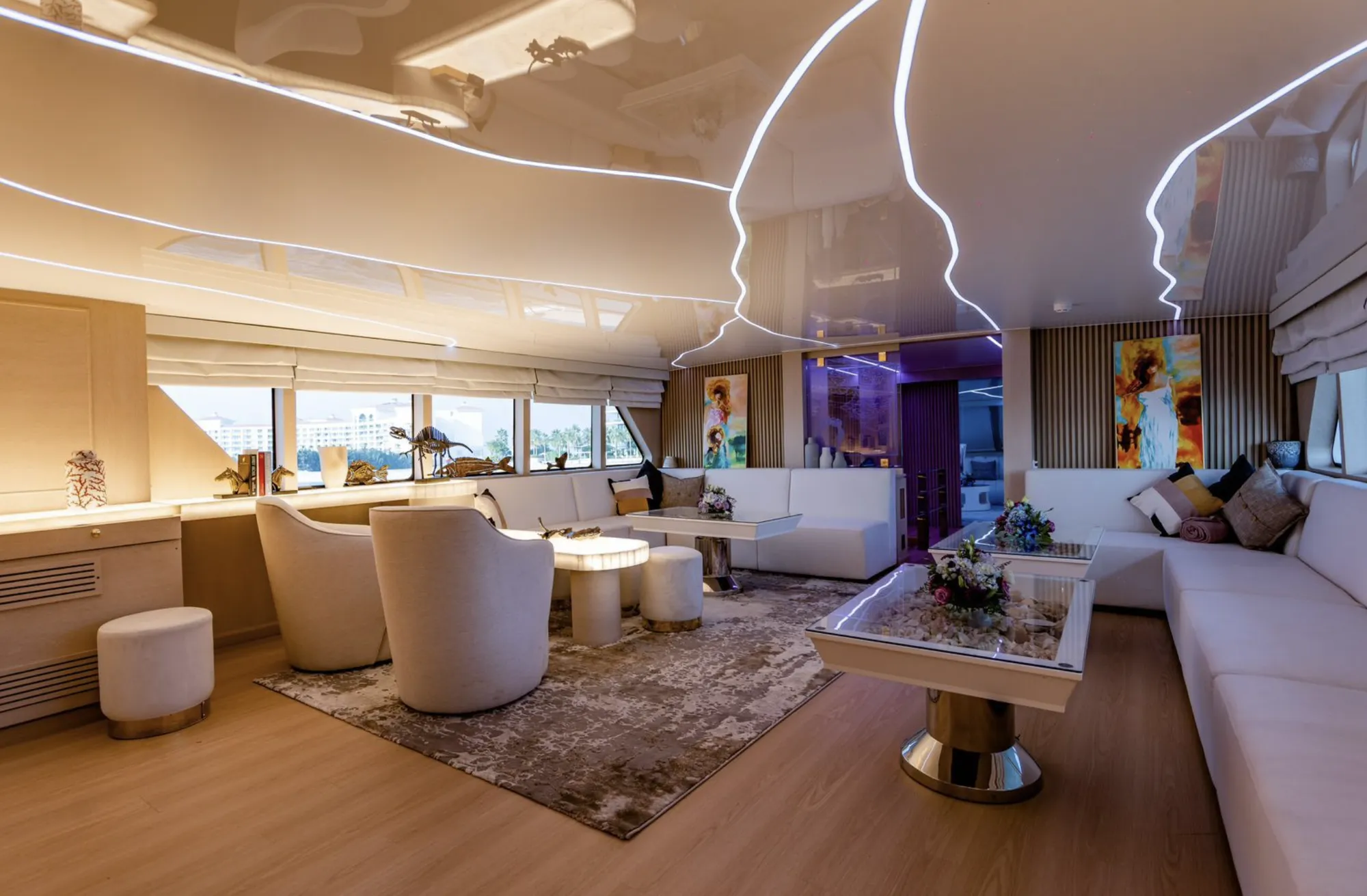
The clearest sign of the shift is where light sources live. A fixture-based approach treats light as an object placed in a room — a pendant, a sconce, a downlight — chosen after the architecture is settled. An architectural approach integrates the light source into the joinery, the ceiling detail, the floor line itself, so the room glows from within its own structure rather than being lit by objects added to it afterward. The practical consequence is that lighting decisions have to be made at the same stage as the joinery drawings, not after them — a sequencing change that affects how early in a project lighting actually gets specified, not just what gets specified.
Circadian tuning is the other half of the shift, and it’s less about mood lighting than most owners assume. Systems that shift from cooler, energising light in the morning to warm, amber tones by evening are now close to standard on new builds, and increasingly retrofitted into refits. The genuine benefit is measurable rather than atmospheric: appropriate light exposure through the day, and specifically avoiding blue-rich light in the evening, supports better sleep quality — a real consideration for owners spending extended stretches aboard, where the usual environmental cues that regulate sleep (natural light through a bedroom window, a fixed daily rhythm) are often disrupted by cruising schedules and time zones.
There’s a genuinely practical yacht-specific argument for this too, separate from comfort. Modern LED architectural lighting draws dramatically less power than the fixtures it replaces — often 80 to 90 percent less — which extends generator run time and gets meaningfully more capability out of battery reserves. A lighting decision made for atmosphere turns out to have a real efficiency dividend as a side effect, which is not always true of design choices marketed as sustainable.
One detail worth knowing before a refit, specifically: fixtures and control systems don’t age at the same rate. Quality LED fixtures can run 50,000-plus hours, which is a decade or more of use. Control systems evolve considerably faster, and many yachts update the control layer every five to seven years while the physical fixtures themselves stay untouched. An owner planning a lighting refit should budget and specify accordingly — the fixtures are close to a one-time decision, the control system is not, and conflating the two leads to either overspending on fixtures that will outlast several control-system generations, or underspending on a control layer that needed room to be updated independently.
The underlying principle, stripped of the technical detail, is simple: light shapes how large a room feels, what time of day it seems to be, and how a guest’s mood settles within minutes of walking in — which is precisely why it belongs in the same design conversation as the architecture, not bolted onto it once the real decisions are finished.