refitting for charter vs. refitting for yourself
Two Different Briefs

The question that changes almost everything about a refit — more than budget, more than yard choice — is one many owners aren’t asked until well into planning: is this yacht going to earn its keep, or is it staying private. The two answers lead to genuinely different projects, not variations on the same one.
The regulatory gap alone is substantial. A privately used yacht between 24 metres and 500 gross tons has to meet baseline safety and pollution standards, but carries no specific manning requirements or commercial certification. The moment a yacht moves into charter, that changes materially — classification from a recognised society, compliance with the applicable large yacht code, minimum safe manning requirements, and a safety management system all become mandatory rather than optional. If the yacht wasn’t originally built with any of this in mind, retrofitting it isn’t a line item; it’s frequently the most expensive single element of the entire refit, and the one most likely to reveal that the vessel’s fundamental design assumptions don’t easily support commercial certification at all.
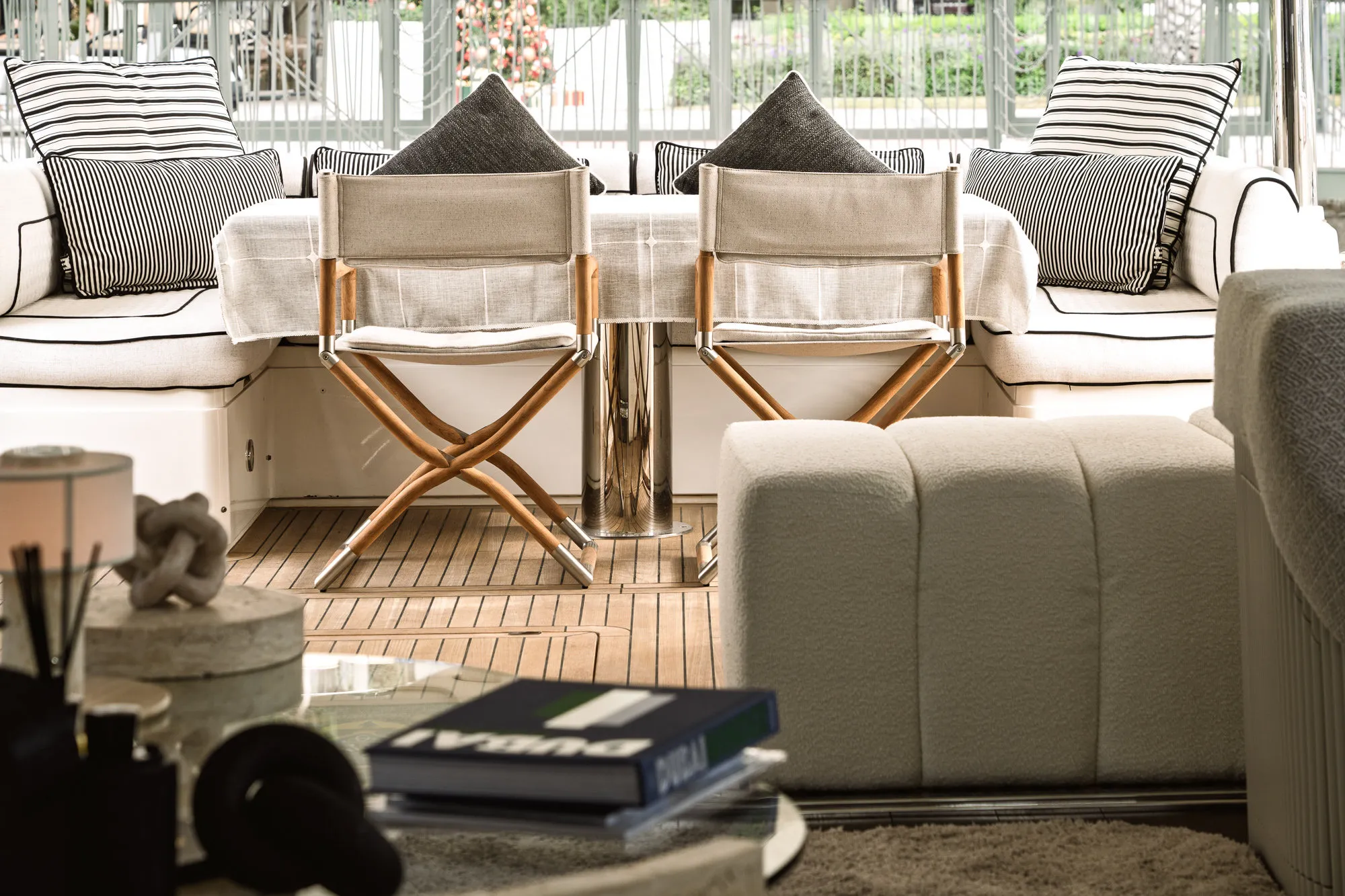
Material specification diverges just as sharply, for a reason that’s easy to underestimate: a charter yacht is, functionally, a rotating hotel with a new set of guests every week or two, none of whom treat the furniture the way an owner’s own family would. Designers who work regularly on charter refits describe defaulting to contract-grade textiles — genuinely hotel and restaurant-level performance fabrics — for anything upholstered, specifically because private-use materials, chosen for how they feel to an owner who will use them carefully, simply don’t survive the wear pattern of back-to-back charter guests who have no reason to be careful.
Storage tells the same story from a different angle. A private yacht’s storage needs are shaped by one household’s actual possessions and habits. A charter yacht needs to absorb linens, provisions, and equipment for an unknown, rotating set of guests every fortnight, which is why charter-focused designers push storage into every available void — under bed platforms, inside ottomans, beneath banquette seating — far more aggressively than a private brief would typically call for. It isn’t a design preference; it’s a operational necessity that private use doesn’t generate.
Dining and seating capacity is where the two briefs most visibly disagree. A private owner sizes a dining table and seating plan around their own family and typical guest count. A charter yacht has to accommodate a full house at capacity, indoors, with weather-contingency seating, and often a table that extends specifically because a private-sized table becomes a liability the one week a full charter party actually books. Owners who refit for private use first and consider charter later frequently discover this gap only once a broker points out that the yacht, as configured, can’t actually seat the guest count it’s supposed to sleep.
None of this makes one brief better than the other — it makes them different projects that happen to start from the same hull. An owner who’s honest about which one they’re actually planning, before the scope is written rather than after the yard has started work, avoids the single most common and most expensive refit mistake: discovering the vessel was quietly specified for the wrong use case, months into a project that assumed otherwise.