how to choose a refit yard: questions owners should ask first
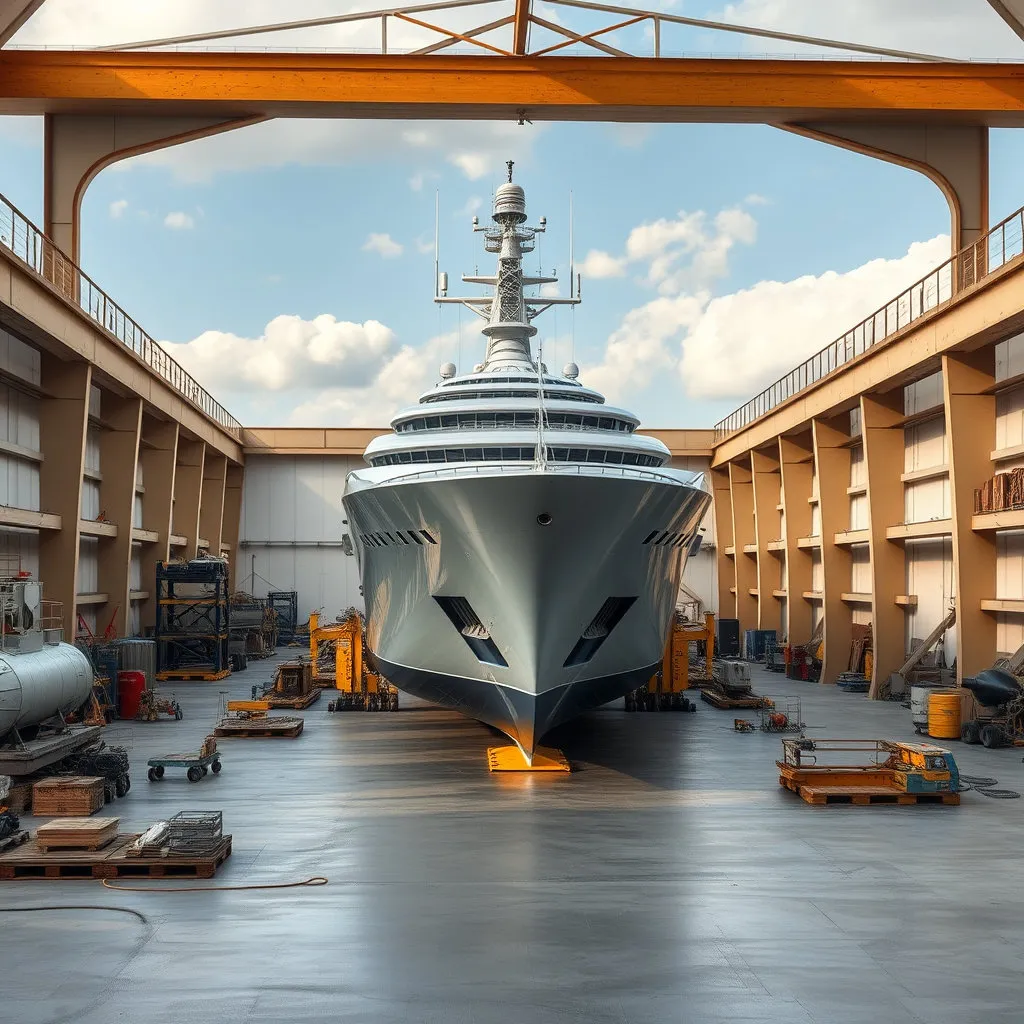
Choosing a refit yard is often treated like booking a hotel — location, price, availability, done. It’s worth treating more like hiring a contractor for a multi-million-dollar capital project, because that’s what it actually is. The yard determines quality, schedule, and final cost more than any other single decision in the process, and it’s frequently made with less rigour than it deserves.
Does this yard actually do work like mine, regularly — not just work my size?
A yard capable of physically accommodating a 45-metre yacht and a yard that regularly refits 45-metre yachts of your type are not the same thing. A facility that mostly services motor yachts under 25 metres, even one with a large enough dry dock, is a different proposition from a specialist in larger sailing or motor yachts — the skills involved in rig work, complex hydraulics, or carbon fibre repair don’t transfer automatically just because the physical capacity is there. Ask specifically what the yard’s last several projects actually were, not what it’s theoretically equipped to handle.
What in this quote is fixed, and what is an estimate?
Refit quotations typically blend fixed-price line items with time-and-materials estimates and allowances, and the difference matters enormously once work begins. It’s worth asking the yard to walk through the quote line by line and identify which figures are guaranteed and which are projections. The lowest quote in a comparison is rarely the best value, for one of three reasons: the yard has underestimated the scope, which shows up later as change orders; it’s underpricing labour, which raises real questions about staff quality and retention; or it’s deliberately quoting low to secure the contract, intending to recover margin through variations once the yacht is already committed to the yard. None of these are visible in the number itself — they only become visible when you ask what’s behind it.
Does the yard actually own the facility you’ll be using?
Some yards subcontract drydocking or lift capacity to a nearby, separately-owned facility. That’s not disqualifying on its own, but it introduces a second party into the relationship, and it’s worth understanding what happens to your project if the yard and the facility owner have a disagreement mid-refit. Pass-through rights — your ability to stay in control of the yacht regardless of a dispute between those two parties — are the kind of contractual detail that only surfaces if someone asks about it directly.
What is this yard’s capacity right now, not in general?
A highly capable yard running at full stretch is a worse choice, in practice, than a slightly less prestigious one with room to give your project proper attention. Overcommitted yards show it in scheduling pressure, subcontractor availability, and how divided the project manager’s attention actually is — none of which shows up in a sales conversation before the contract is signed.
What contract structure is being used, and what happens if something goes wrong?
Many established yards now use a standardised industry refit contract, which tends to allocate risk and define terms — VAT treatment, invoicing, acceptance, warranty — more clearly than a yard’s own bespoke wording. Whichever is on the table, the real test isn’t the document itself; it’s how the yard responds when something actually breaks after redelivery. Does warranty support come from the original refit team or a separate department? If your yacht is far from the yard when an issue surfaces, does someone get flown out, or are you referred back to the original equipment manufacturer’s support network?
For a large project, has the insurer been brought in early enough?
For refits above a certain scale, insurers may request a formal shipyard risk assessment before underwriting the vessel’s cover during the yard period — and if your insurer expects the yard to agree to a subrogation waiver, they’ll want to see the yard’s own liability insurance and contract terms before agreeing to anything. This is a conversation worth having before a yard is chosen, not after.
The single most reliable filter, in the end, is references from owners and captains who used the yard recently — not for the outcome when everything went smoothly, but for what happened the one time something didn’t. Every yard looks capable in its marketing material. Far fewer are candid about the moment things went sideways, and how they handled it.