interior-only refits: when you don't need to touch the hull
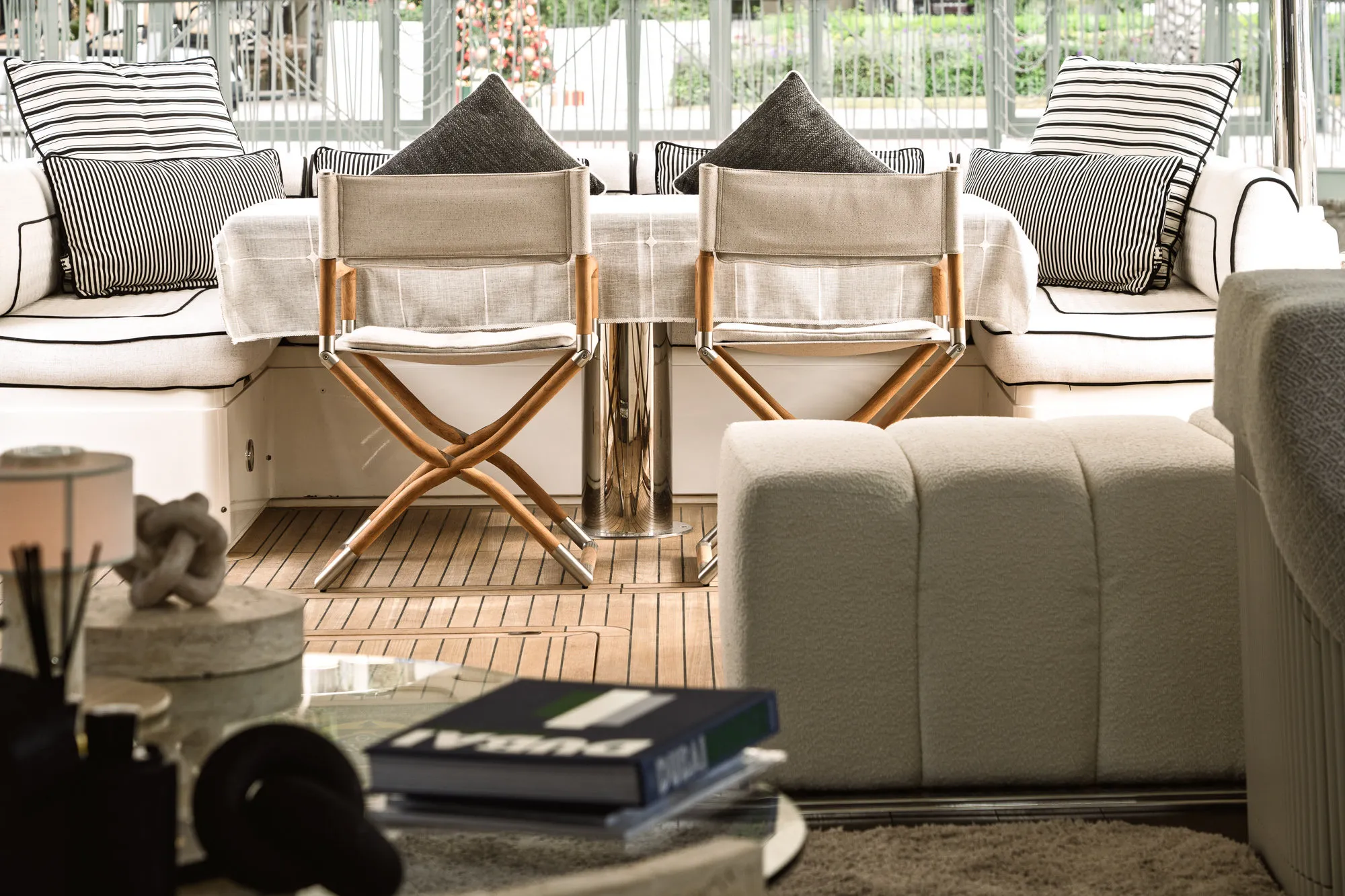
The word “refit” tends to conjure the largest version of itself — a yacht stripped to bare structure, months in a yard, a budget that keeps finding new places to grow. That version exists, and it’s sometimes necessary. But a significant share of refit work never goes near the hull, the propulsion system, or anything structural at all. It stays entirely inside the walls that already exist, and it runs on a fundamentally different risk profile than the projects that get all the attention.
Industry classifications generally separate refit work into a handful of tiers: routine maintenance measured in weeks, a cosmetic refit running three to six months, a technical or survey-driven refit stretching six to nine, and a full structural rebuild that can run well past a year. An interior-only refit sits in that cosmetic tier — new soft furnishings, updated joinery finishes, refreshed lighting and fabrics, sometimes a full reconfiguration of a cabin’s finish palette — without opening up the systems that live behind the panels: wiring, plumbing, HVAC, structural fireproofing. That distinction is the entire reason interior-only refits behave so differently from every other category.
The real advantage isn’t really cost, though it usually costs less. It’s exposure to the unknown. The reason full refits so reliably run over budget is what the industry calls “opening up” — the moment a yard removes panelling or machinery covers and finds corrosion, degraded wiring, or outdated systems that weren’t visible during survey. That discovery process is where most refit budgets quietly stop being budgets. An interior-only project, by design, avoids most of that exposure — if you’re not opening the walls, you’re not finding what’s behind them, which means the single biggest source of refit cost overruns simply doesn’t apply in the same way. It’s a meaningfully lower-risk category of project, not just a smaller one.
That said, “interior-only” is not the same as “unconstrained.” Every yacht’s existing bulkheads, tankage, structural stringers, and service risers are fixed in place unless the project scope explicitly reopens them — and reopening any of those is what turns a cosmetic refit into a technical one, with a technical refit’s budget and timeline attached. An owner who wants an entirely new layout, not just new finishes, is often describing a different, larger project than the one they think they’re asking for. The honest version of an interior-only refit works within the yacht’s existing bones: new surfaces, new materials, new atmosphere, built onto a structural and technical foundation that stays exactly where it is.
Which is precisely why the category has a real limit, and it’s worth being honest about where it sits. An interior-only refit is the right call when the systems behind the panels are already sound — when a recent survey shows the wiring, plumbing, and HVAC have years of useful life left, and the actual problem is that the yacht looks and feels older than its systems are. It is the wrong call when those systems are already borderline, because a beautiful new interior installed over failing infrastructure is a deferral, not a solution — the same wiring or ageing HVAC system will eventually need attention regardless, usually at a worse moment than a planned refit window.
There’s a practical seasonal logic to interior-only projects that owners in the Gulf, in particular, tend to appreciate once they’ve been through one: because the work doesn’t require haul-out or major systems access, it can often be scheduled around a single season at a yard — commonly a Mediterranean winter, timed to have the yacht back in service before the following season begins — rather than the multi-year planning horizon a structural rebuild demands. For an owner who knows their systems are in good order and simply wants the interior to feel current again, that’s a genuinely different proposition than the word “refit” usually implies.
The category rewards owners who already know their yacht well — who have the survey history and maintenance records to say with confidence that what’s behind the walls doesn’t need touching. For everyone else, the honest first step isn’t choosing between interior-only and full refit at all. It’s finding out, properly, which one the yacht actually needs.