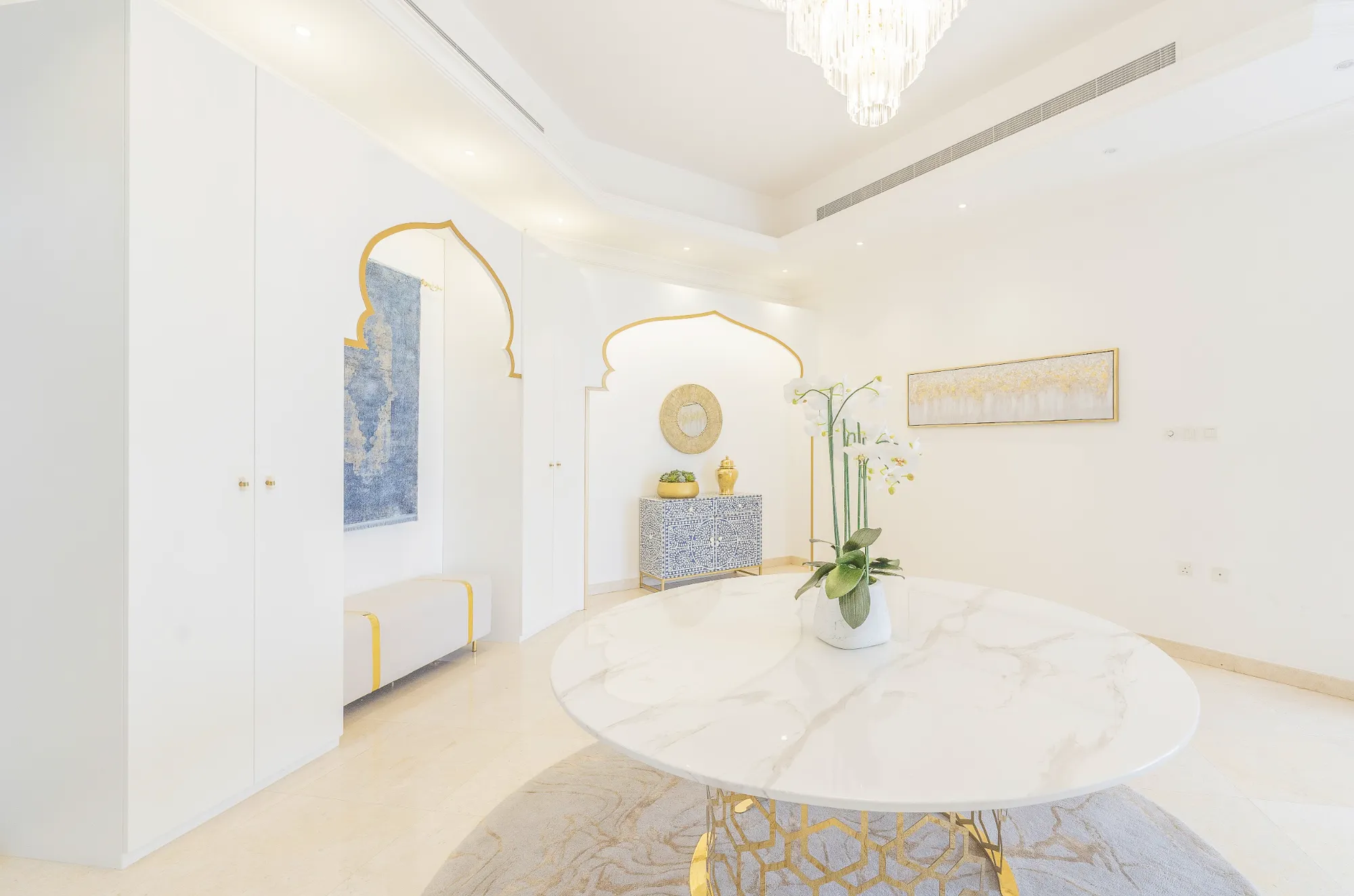
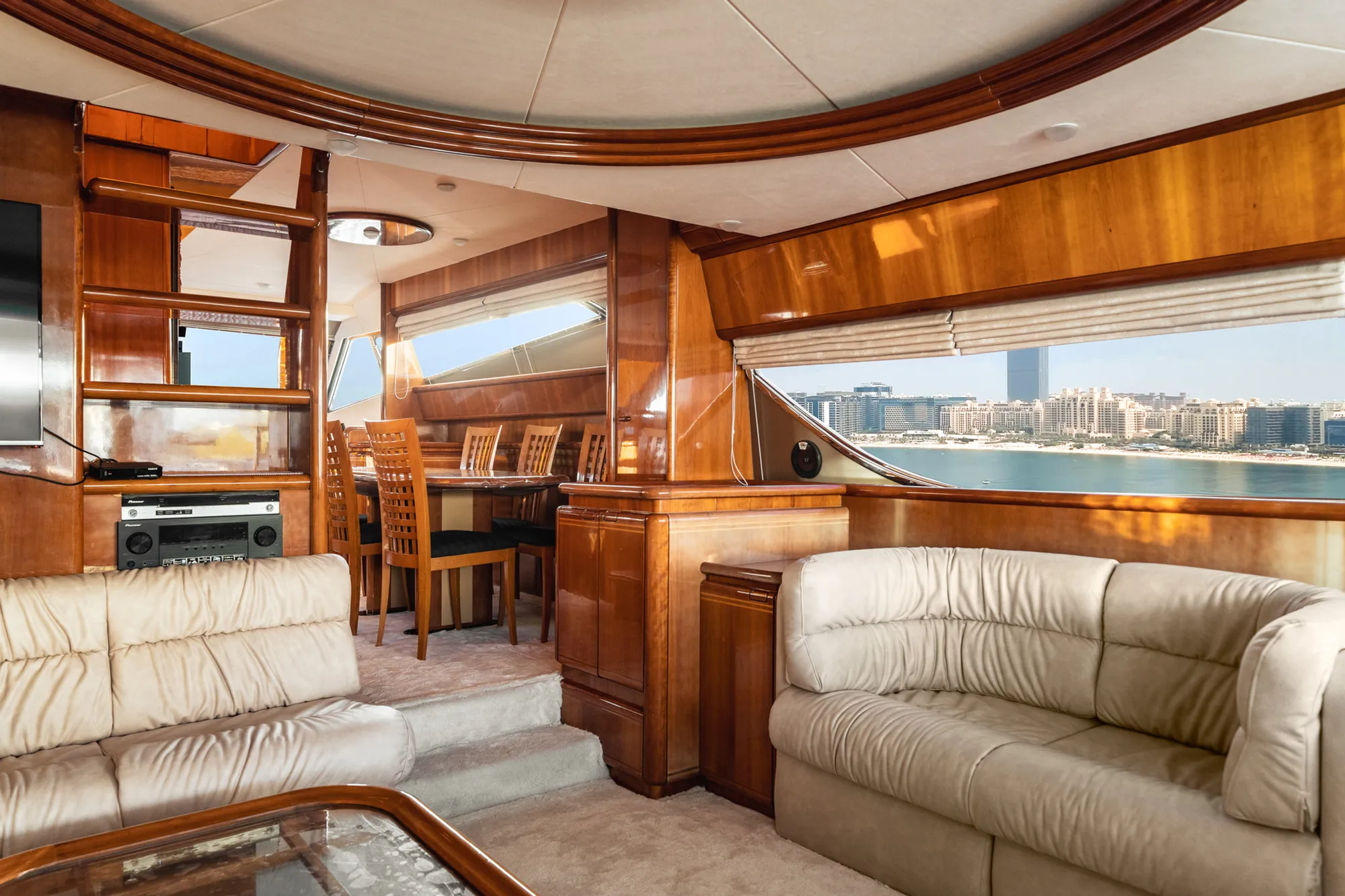
marble and stone at sea
Why Weight Isn’t the Only Problem
Weight is the constraint everyone mentions when the subject of marble on a yacht comes up, and it’s real — a standard 2x1 metre slab can weigh over 100 kilograms, a genuine liability on a vessel where every kilo affects fuel consumption, stability, and top speed. But weight is the problem an owner can picture easily, which is exactly why it gets all the attention. The deeper problem, the one that actually determines whether a marble installation survives, is flex.
A yacht’s hull and superstructure move constantly, even at anchor, in ways a building’s foundation never does. Stone has almost no tolerance for that kind of continuous, low-grade flexing — industry experience with marine installations puts the practical limit at roughly half an inch of flex over a ten-foot span before a standard stone surface cracks, and that’s treated as a hard fact rather than a rule of thumb by people who’ve watched it happen repeatedly. This is the part of the problem a purely weight-focused specification misses entirely: a perfectly lightweight stone panel that isn’t engineered for flex will still fail, just as reliably as a heavy one, because weight and flex tolerance are related but genuinely separate engineering questions.
The solution the industry has converged on solves both problems at once, which is worth understanding rather than taking on faith. Lightweight marble technique bonds a thin veneer of real stone, sometimes as little as 3 millimetres, to a honeycomb support structure originally developed for aerospace applications. The result cuts weight by as much as 70 percent compared to a solid slab — but the more important effect, less commonly discussed, is that the honeycomb-backed panel actually has better bending and compression resistance than the original slab it was cut from. It isn’t a compromise between beauty and practicality; done properly, it’s a genuine engineering improvement on both axes at once.
Installation is where a good specification can still go wrong even with the right material. Natural stone in a marine application is never really installed as a solid surface — it becomes part of a layered composite system, and every layer in that system has to be engineered and tested together. A single weak layer, an improperly bonded backing, or a support structure that wasn’t matched to the specific installation geometry shows up within months as cracking, detachment, or visible warping, regardless of how good the marble itself was. The failure, when it happens, is almost never about the stone; it’s about a system that was assembled without treating every layer as equally load-bearing to the outcome.
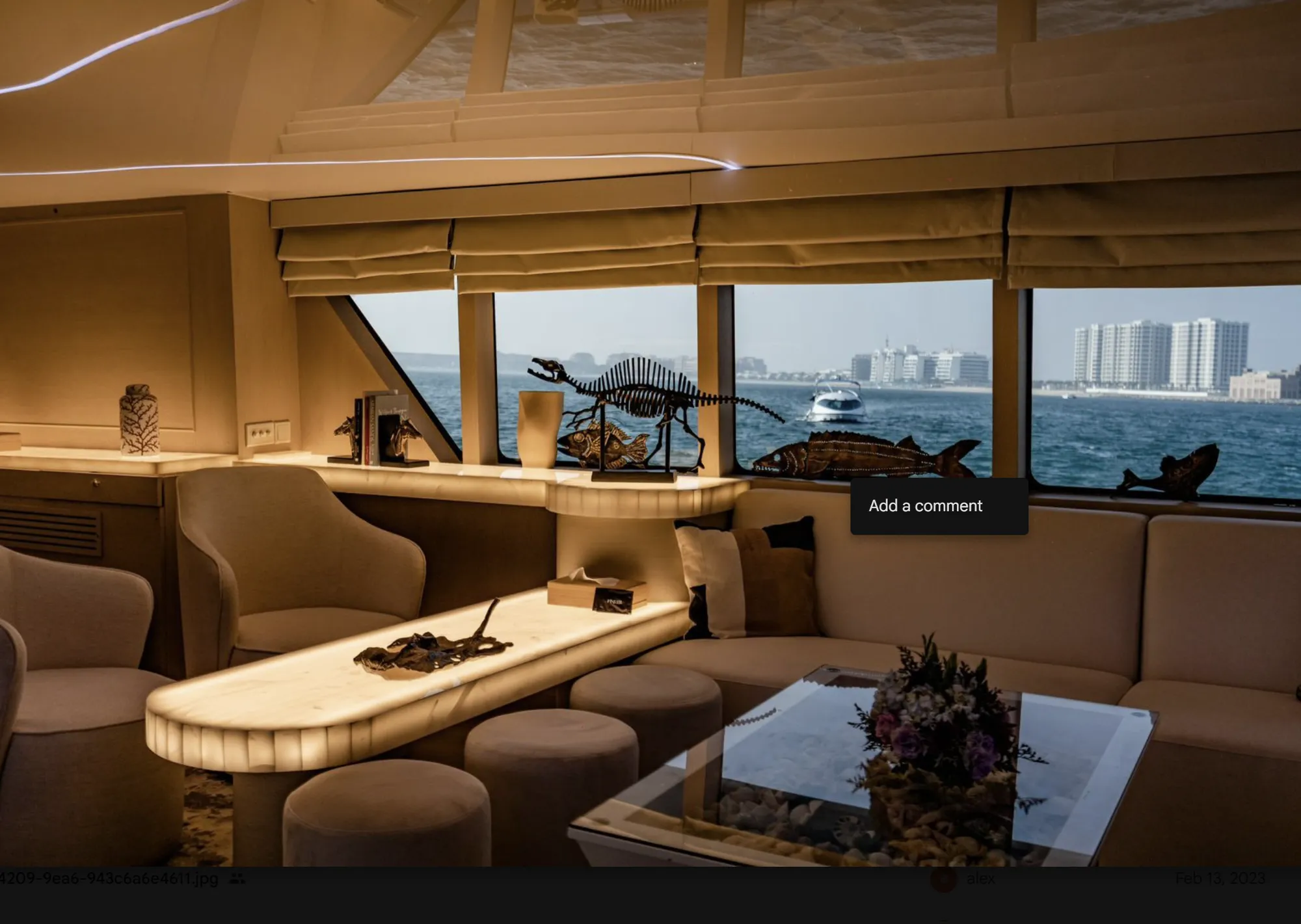
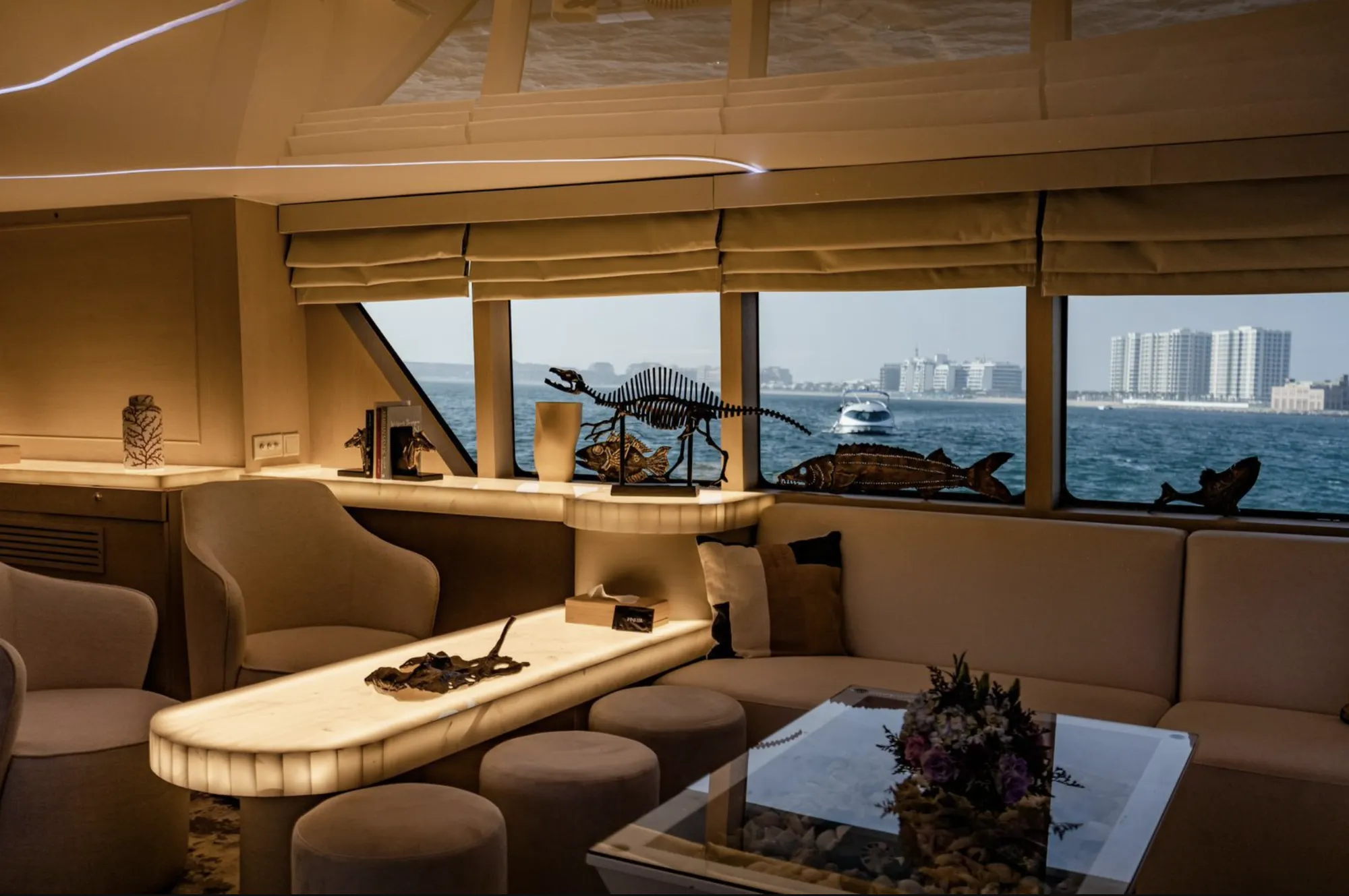
Backlit applications, increasingly popular for onyx and other translucent stones, add a further layer of complexity that’s easy to underestimate: the lighting integration has to be engineered alongside the structural backing from the start, not added afterward, or the result is unstable both visually and structurally at once.
The honest specification question for an owner considering stone isn’t “how do we make this light enough.” It’s “who is engineering the full system — slab, backing, installation, and any lighting — as one integrated decision, rather than treating weight reduction as the whole problem solved.” Marble that’s genuinely well-specified for a yacht ages the way it’s supposed to: cool, dense, quietly permanent against the softer materials around it. Marble that was specified for weight alone tends to reveal, within a season or two, that weight was never the only thing standing between the material and failure.