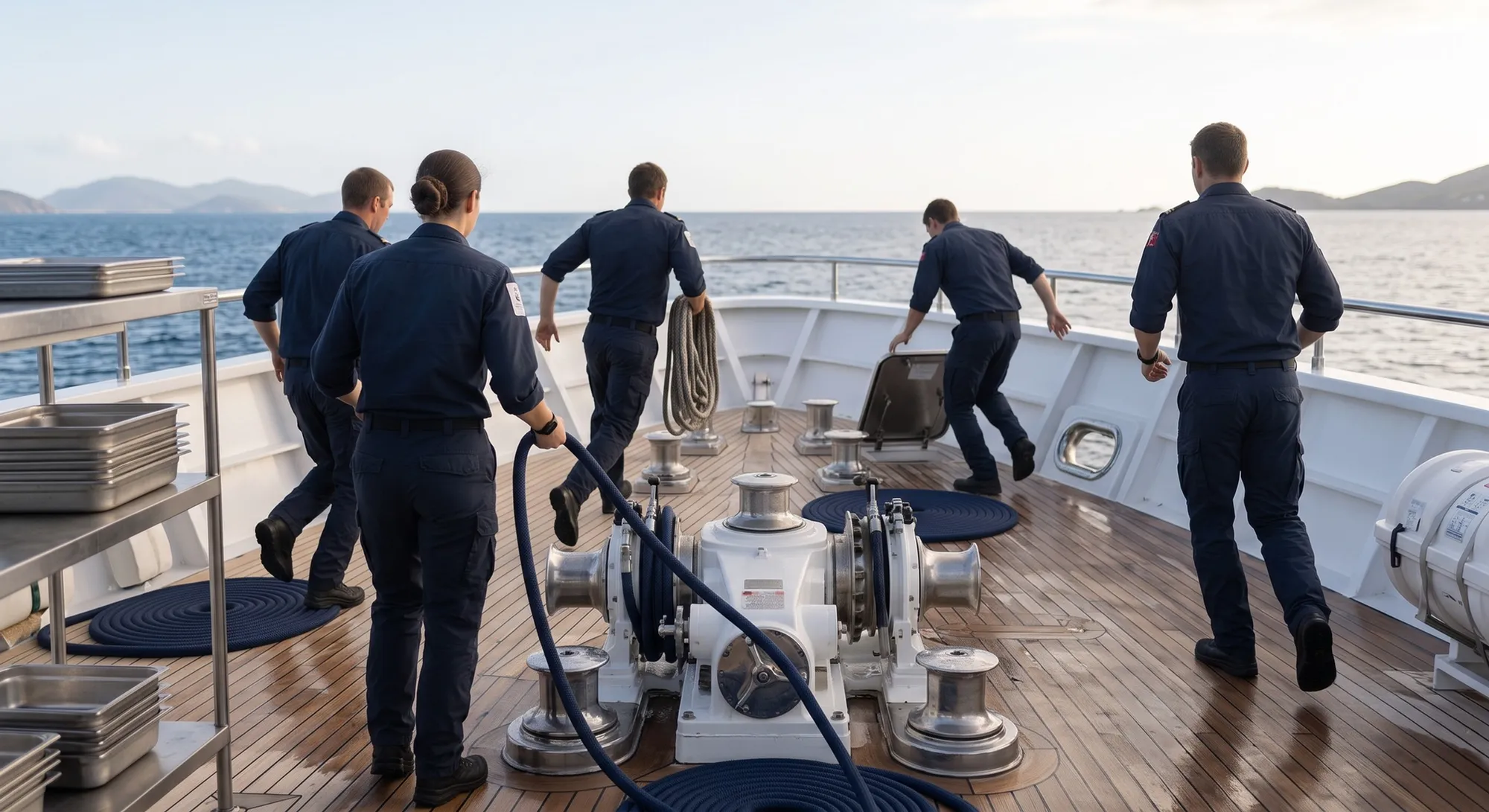
life below decks: what owners should understand about crew and circulation
Most owners never think about circulation until it fails. A hallway that’s a few centimetres too narrow, a service door that opens directly onto a lounge, a crew route that crosses the guest path at exactly the wrong moment — none of it registers as a design decision until it’s already annoying someone. By the time an owner notices, the problem isn’t cosmetic. It’s structural, and it’s usually expensive to fix after the fact.
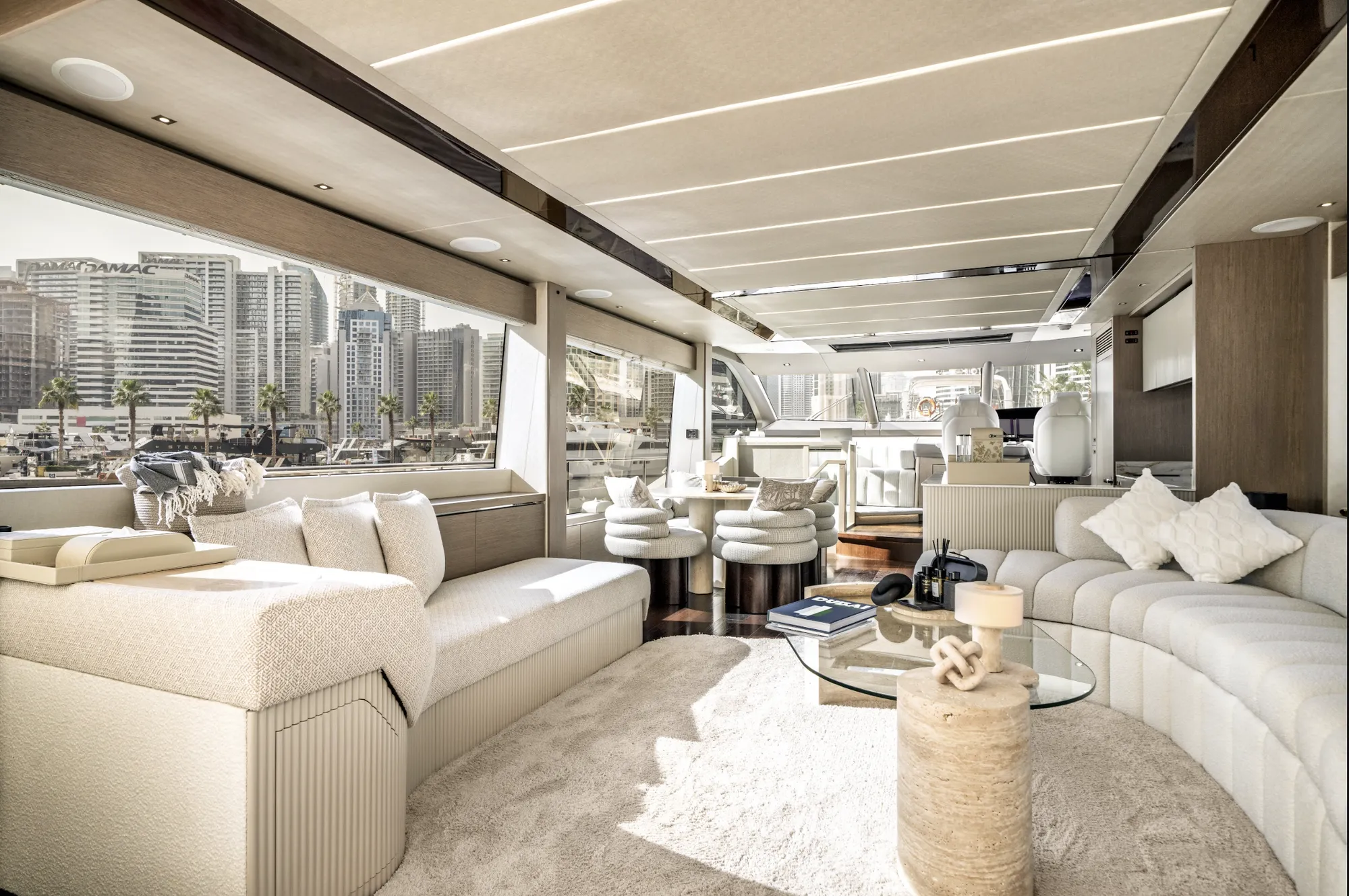
Every yacht runs two circulation systems at once. There’s the one guests are meant to notice — salon to deck, cabin to dining, a sightline that pulls you toward the water. And there’s the one that’s supposed to stay invisible: the crew and service routes that move laundry, provisioning, and staff from one end of the vessel to the other without ever crossing a guest’s line of sight. Designers sometimes describe these as parallel systems — a guest layer and a service layer, running the length of the yacht side by side, with the second one deliberately built to disappear. When it’s done well, an owner never has reason to think about it. When it’s done badly, it’s the single most common source of friction on board, and it’s almost never fixed by better crew — only by a different layout.
There’s a regulatory floor beneath all of this that most owners don’t know exists. The Maritime Labour Convention, 2006 — the international framework governing seafarer welfare, crew included — sets minimum standards for crew accommodation, among them a requirement that every crew member be provided a separate berth of their own. It’s a detail worth knowing not because owners need to become naval architects, but because it explains why crew quarters can’t simply be shrunk to reclaim space elsewhere: there’s a legal floor to how far that trade-off can go, and good design starts above that floor, not at it.
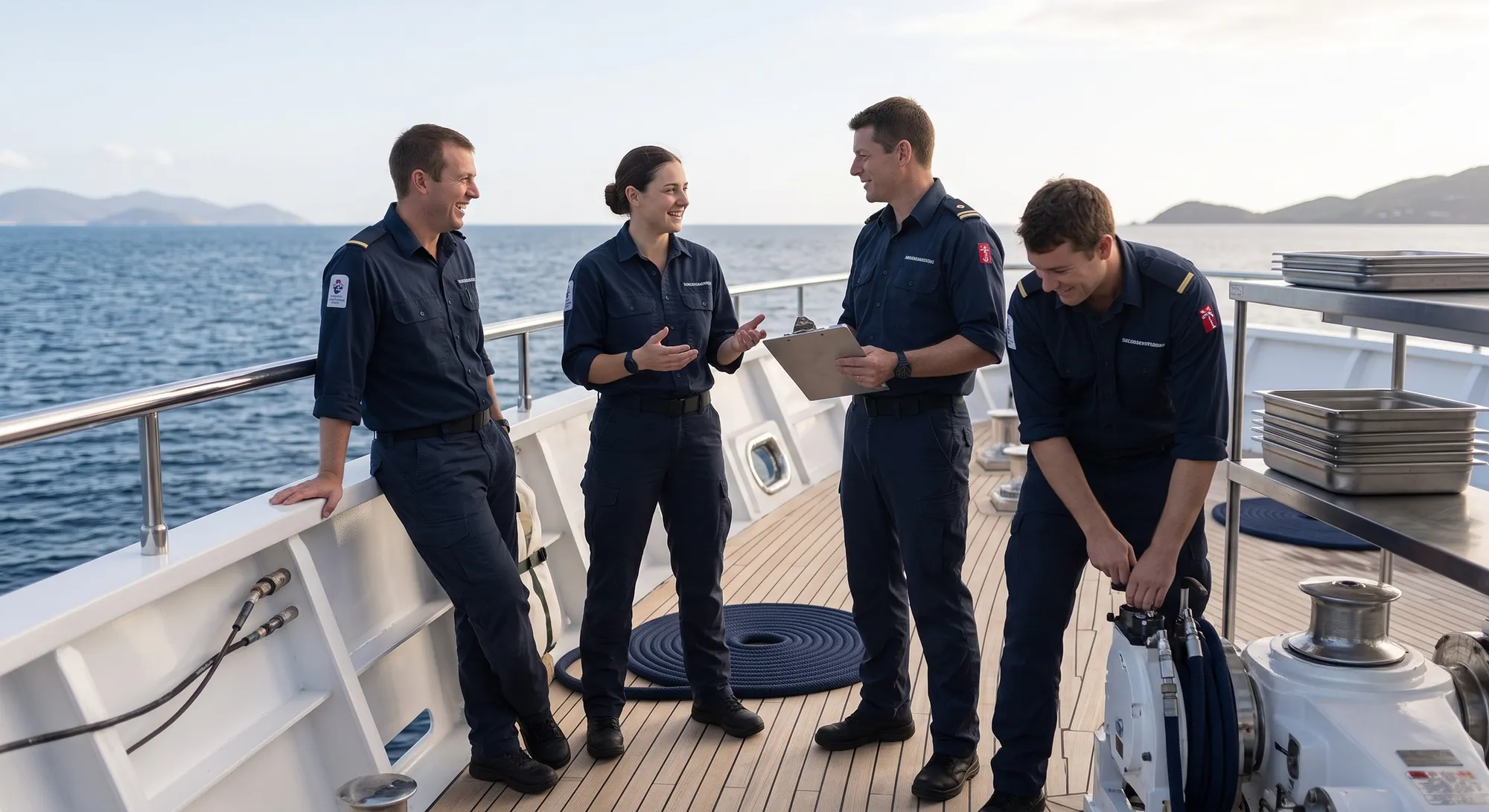
What separates an adequate crew layout from a genuinely good one usually isn’t square footage — it’s a handful of specific decisions made early. Boat International’s reporting on crew quarter refits includes a telling example: on one well-known megayacht rebuild, the owner and captain toured the existing crew accommodations before the project began and immediately rejected the original three-bunk cabin configuration in favour of private staterooms — a decision made not for the crew’s comfort alone, but because the previous arrangement was quietly driving turnover. Crew who don’t have anywhere private to decompress on a months-long charter season tend to leave, and losing an experienced chief stewardess or engineer costs an owner far more, in disruption and re-training, than the marginal square metres a better layout would have required.
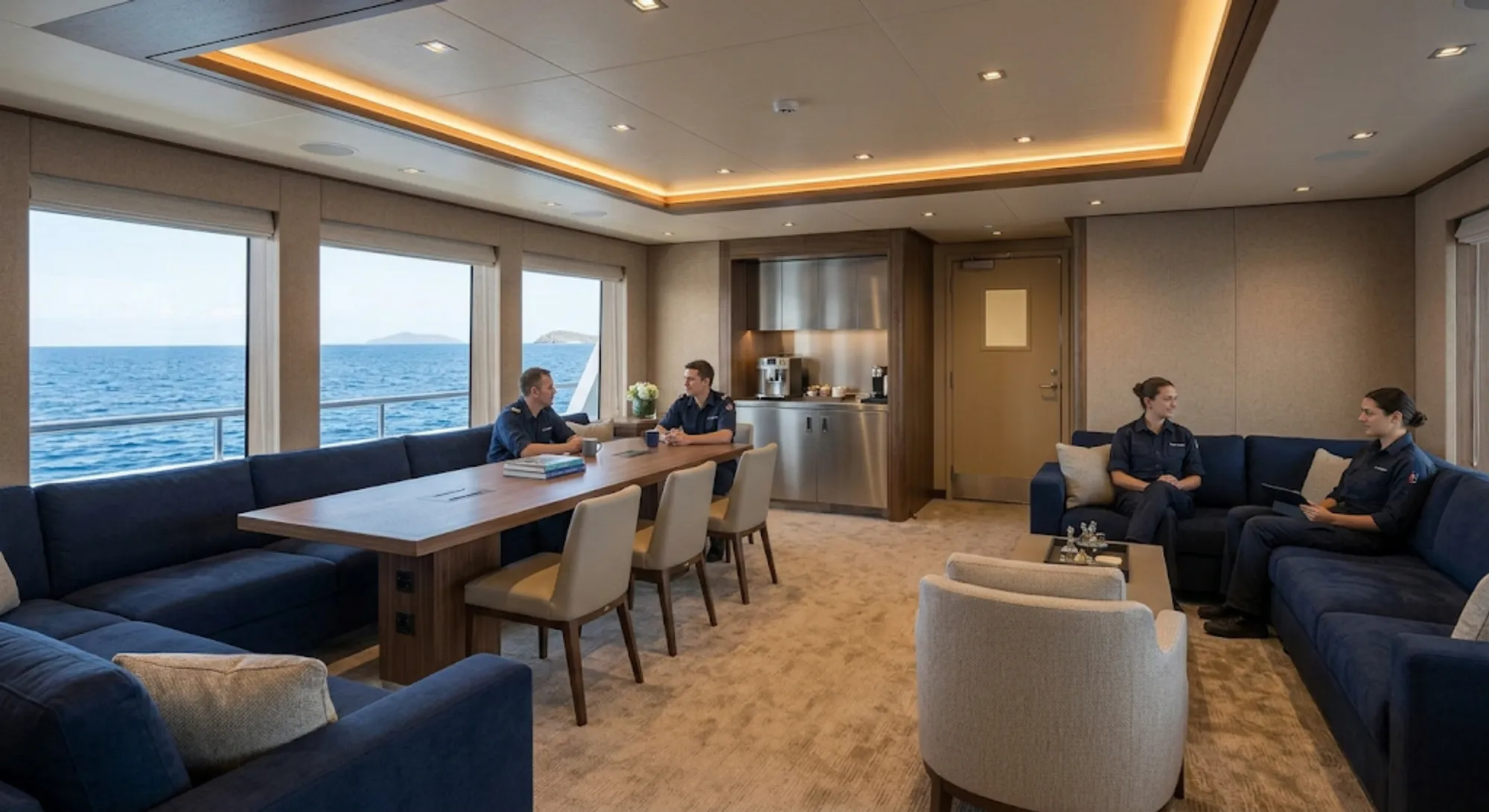
The oldest phrase in the industry — “happy crew, happy ship” — gets repeated often enough to sound like decoration, but it maps onto something concrete in how a yacht is actually run. A crew mess with real daylight and a laundry sized for the vessel’s actual linen volume isn’t a luxury line item; it’s the difference between a service team that stays for seasons and one that churns every few months. Owners rarely connect the two, because the layout decision and the retention problem arrive years apart. By the time the pattern is visible, it looks like a hiring problem. It’s usually a floor plan problem that was made two or three refits ago.
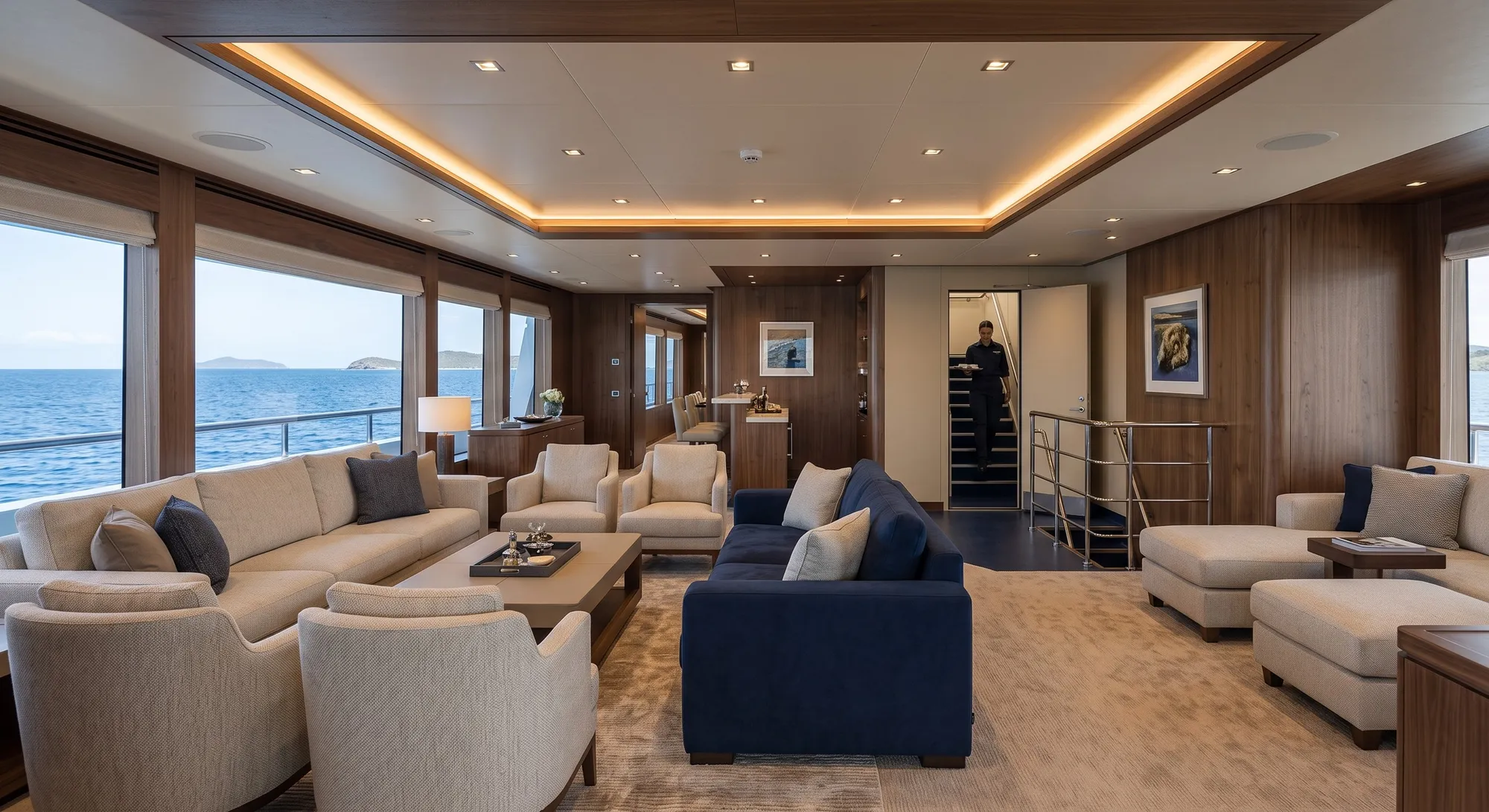
None of this competes with the guest experience — it protects it. A crew route that runs discreetly behind a wall, rather than through the middle of a lounge, is the reason plates arrive at the table without anyone having watched them travel there. A well-placed crew stairwell is the reason the yacht feels calm rather than staffed. The best crew circulation is the kind an owner never has to think about, which is exactly why it’s worth thinking about once, properly, at the design stage — because after launch, the only way to fix a bad service route is to open up a finished yacht and start again.
For an owner evaluating a refit or a new build, the useful question isn’t “how much space does the crew need.” It’s closer to: can the crew do their job without a guest ever seeing them do it — and can a stewardess actually rest, off shift, somewhere that isn’t a shared bunkroom two decks below the engine noise. Get that right, and everything else on board tends to run quietly. Get it wrong, and no amount of crew training fixes what the layout keeps breaking.