fendertex: the fender that changed how superyachts dock.
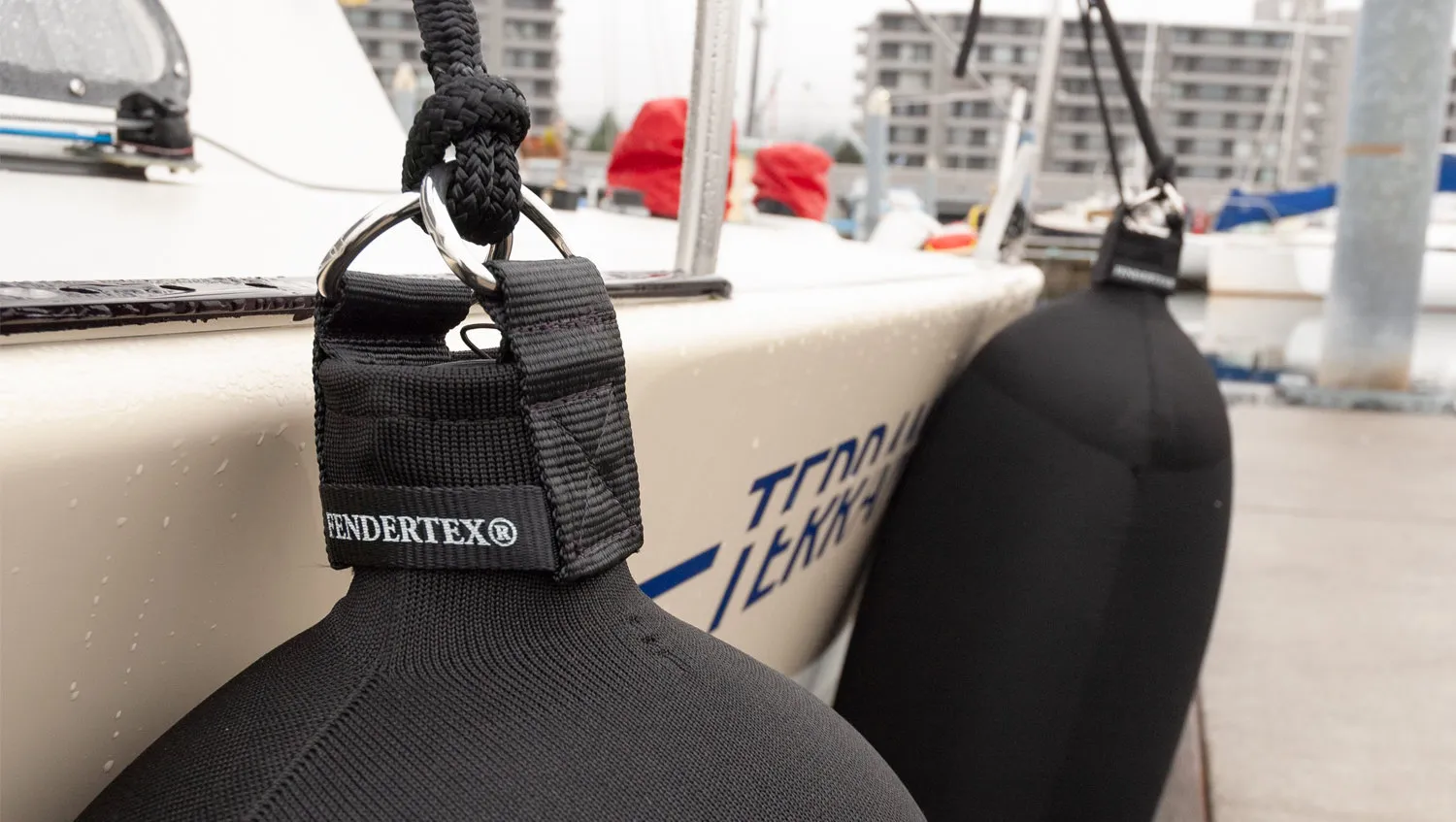
Docking is the moment a yacht is most exposed and least admired. Long before a guest steps aboard, the vessel has been eased against a quay, nudged between neighbours, held off a wall in a crosswind — and the humble fender has done the work of protecting a hull that may have taken months to fair and paint. For most of yachting history, that work was done by something heavy, bulky and faintly apologetic: a large cylinder of rubber or PVC, stored where it could be hidden, deployed where it could not.
Fendertex set out to rethink the object rather than refine it. Its fenders are made not from moulded plastic but from high-performance woven textile, inflated to shape. The change of material changes almost everything that follows.
The first difference is weight. A textile fender is a fraction of the mass of its conventional equivalent, which matters more than it sounds. Crew handle fenders constantly, often at awkward heights and in a hurry; lighter gear is safer gear, and easier on both the people and the topsides they are protecting. The second difference is the surface itself. The woven fabric is engineered to resist abrasion and, importantly, not to leave the dark scuff marks that traditional fenders transfer onto a painted hull — a small thing that any owner who has spent a morning polishing those marks away will recognise as not small at all.
Then there is what the material endures. Marine fenders live outdoors, under sun, against salt, taking compression loads every time the vessel moves against its lines. Fendertex’s fabrics are built for that life: resistant to ultraviolet fading and to the repeated heavy loading that flattens and degrades lesser products. They hold their colour and their form across seasons that would visibly tire a conventional fender.
The final difference is the one crews talk about most. A textile fender can be deflated and folded down to a fraction of its working size. Storage on a yacht is always contested space; gear that collapses when not in use, and inflates in moments when it is, resolves a genuinely awkward problem. It is the kind of practical intelligence that, once experienced, is difficult to give up.
What makes the product interesting beyond performance is that it satisfies a newer
expectation. Owners increasingly regard every visible element of a vessel as part of its design — and a fender, traditionally the least considered object on deck, is no longer exempt. A clean, lightweight, well-made fender that does not mark the hull and does not need hiding sits comfortably within that more deliberate view of how a yacht should look and work. That, more than any single specification, is why they are increasingly written into superyacht equipment lists from the outset rather than added as an afterthought.
The technology is quietly clever; the appeal is straightforwardly practical. Lighter to handle, kinder to paintwork, durable in a punishing climate, and out of the way when the day is done
— it is a rare example of a piece of working kit improving on every axis at once. Fendertex is exclusive in the UAE through Yacht IQ.