how we specify a yacht interior: the maison azure process.
I am often asked what we actually do — what happens between the first conversation and the moment an owner steps aboard a finished interior. The honest answer is that most of the work is invisible by design. A yacht interior that feels effortless is the product of a great deal that the owner never sees. This is how we get there.
It begins with listening, not drawing. The first conversations are rarely about materials or layouts. They are about how someone lives — who comes aboard, how they entertain, where they retreat, what calm looks like to them. I have learned to pay attention to the small admissions: the room they never use at home, the chair they always choose, the light they prefer at the end of the day. A brief, properly understood, is a portrait of a life lived at sea before a single surface is chosen.
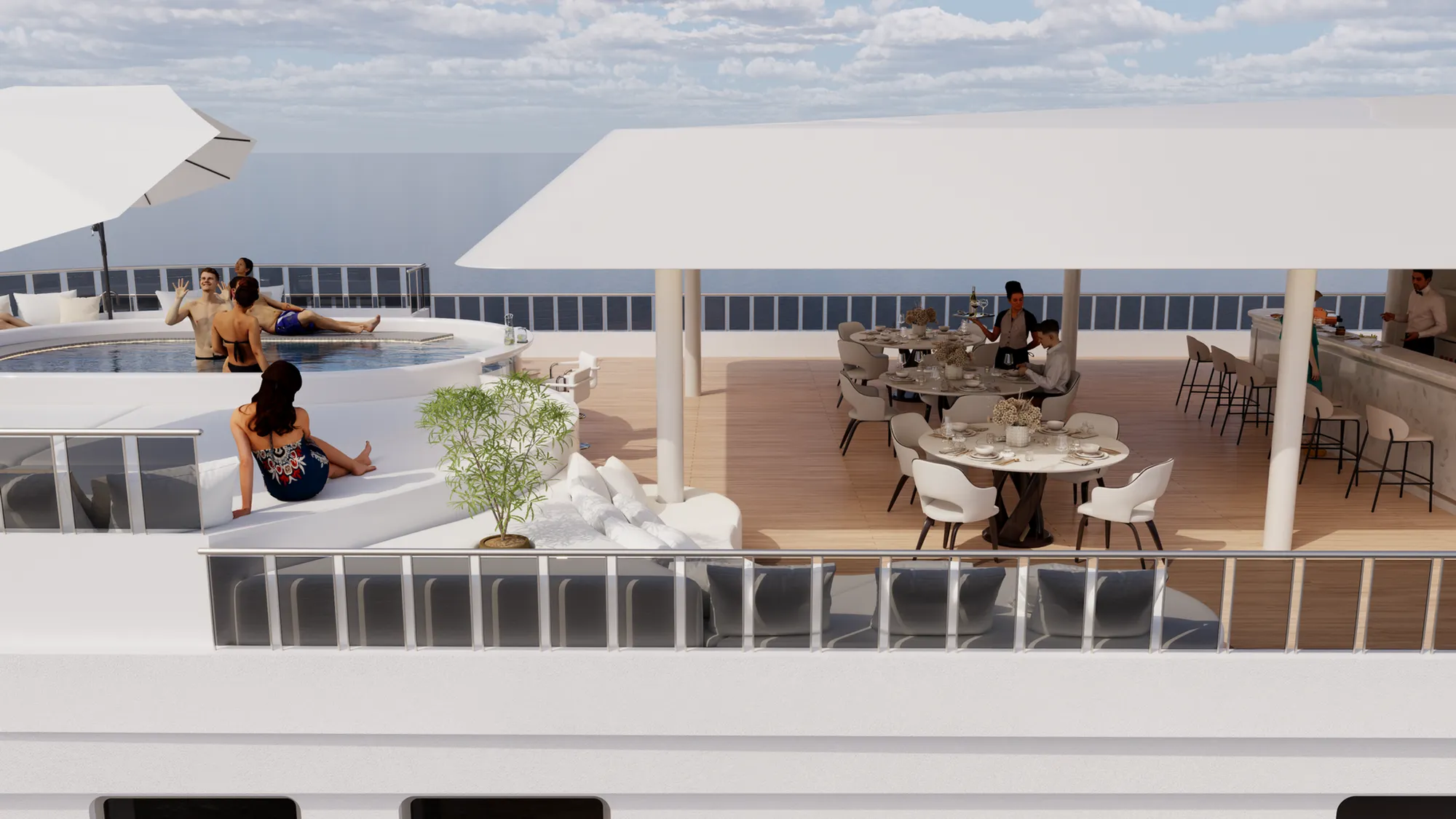
From there we move to the architecture of the space before its surfaces. Spatial planning on a yacht is unforgiving in a way residential work is not. Every centimetre is accounted for, every door swing and sightline negotiated against structure, systems and the simple fact that the vessel moves. We plan for flow — for how a space feels to walk through, how it opens and closes, how it serves a quiet morning and a full evening with equal grace. Much of this happens in dialogue with the yard and its engineers, and that dialogue is where good intentions meet reality. It is also where the most enduring decisions are made.
Only then do we turn to material. This is the part people imagine the work to be, and it is the
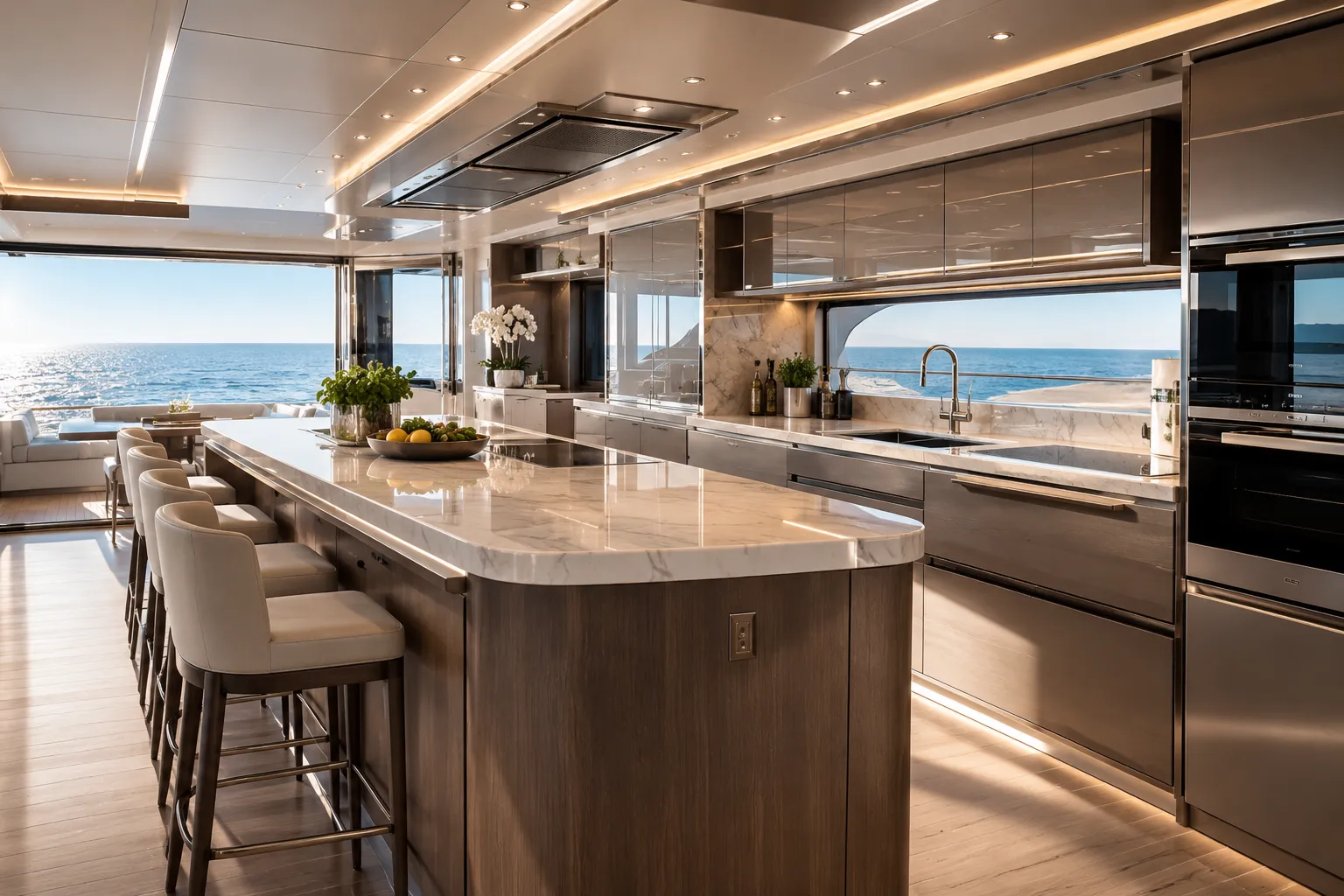
part where restraint matters most. Materials at sea are chosen as much for how they age and perform as for how they look. Salt, humidity, ultraviolet light and constant movement are merciless on anything specified for a drawing room rather than a deck. We select textiles, leathers, stones and timbers that will hold their character through that environment
— and we source specialist marine products through Yacht IQ, where the performance behind a beautiful surface is understood as deeply as the surface itself.
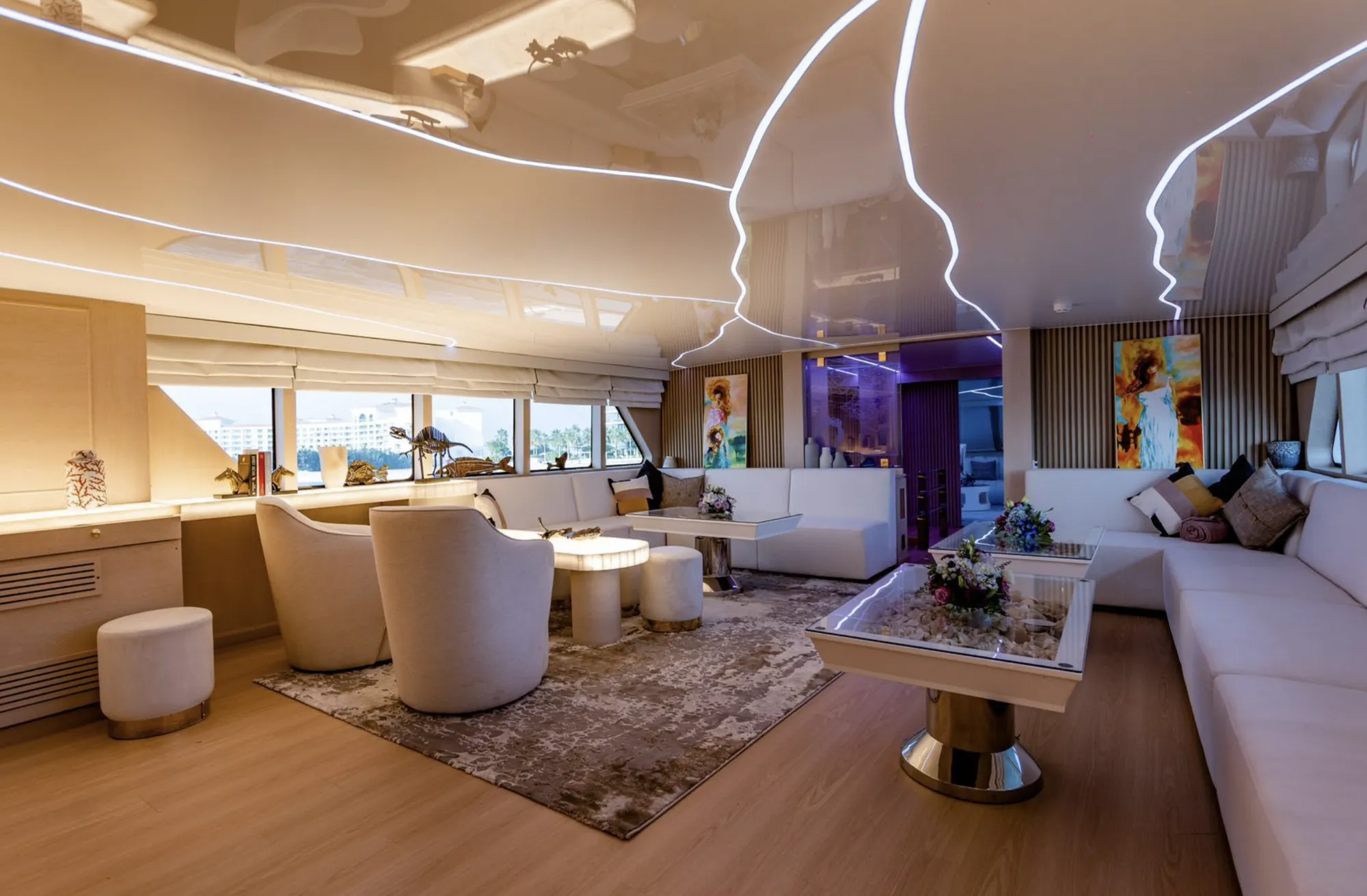
I treat light as a material too. On the water, light changes all day, and an interior has to answer it. We layer lighting the way one layers a room — architectural, ambient, intimate — so that a space can shift from bright clarity at midday to something softer and more held after dark. Lighting, more than almost anything, is what makes an interior feel alive rather than arranged.
Before anything is committed, we prototype. Samples are lived with, not just looked at. Finishes are seen in the light they will actually inhabit. Where a piece is bespoke, we make and remake it until it is right. This stage is slow, and deliberately so. The cost of changing one’s mind on a sample is nothing; the cost of changing it once installed is considerable, and the disruption to a build schedule greater still.
Installation is the quietest part and, in some ways, the most demanding. It is where months of planning either hold together or reveal their gaps. We are present for it because the final ten per cent — the fit of a join, the fall of a curtain, the way a handle meets the hand — is what separates a good interior from a finished one.
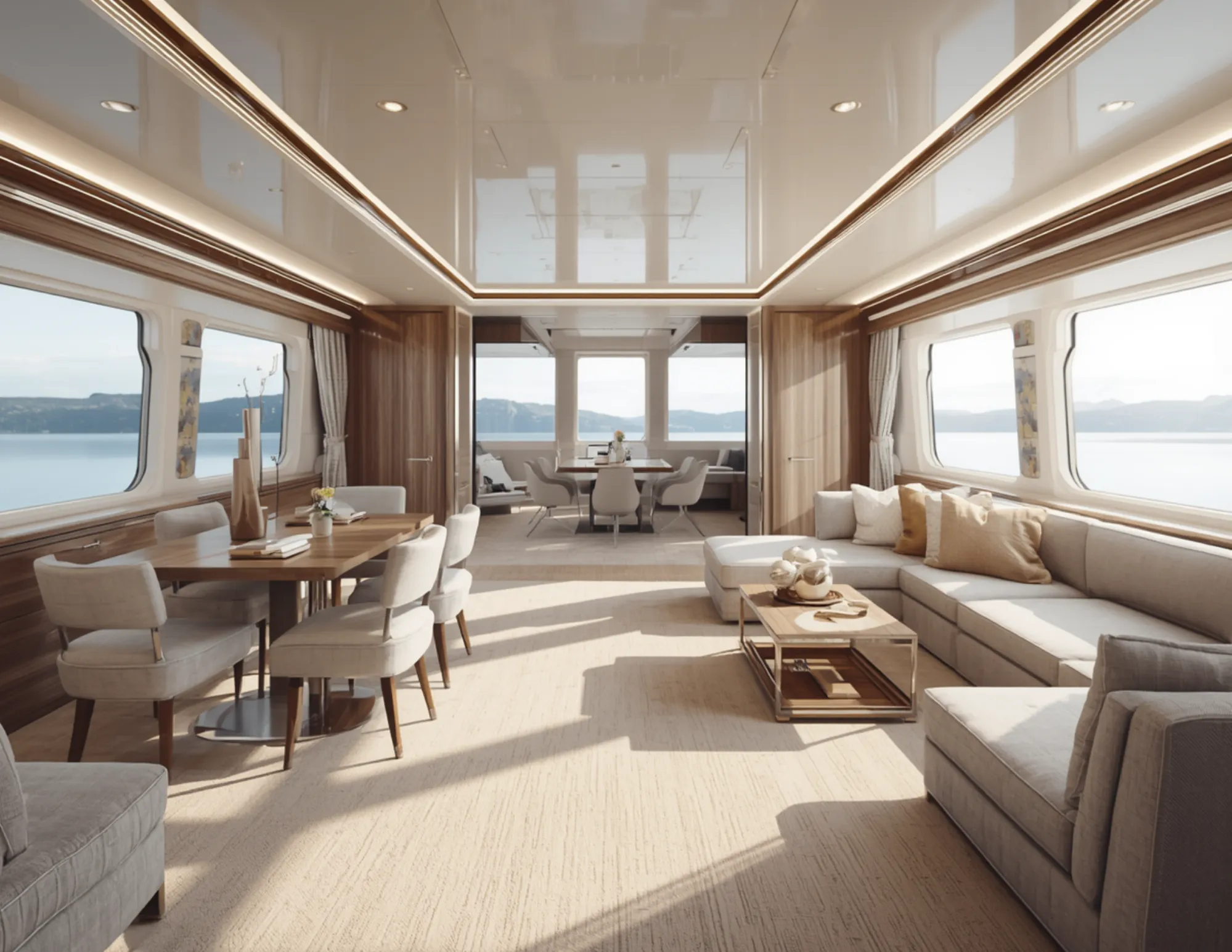
And then we step back. A space we have lived inside for a year becomes, finally, the owner’s. The measure of whether we have done our work well is simple: not whether the interior impresses on the first walk-through, but whether, months later, it still feels like the most natural place in the world to be. Atmosphere, not decoration. That has always been the point.