the new rules of yacht interior design.
How modern owners are redefining luxury at sea
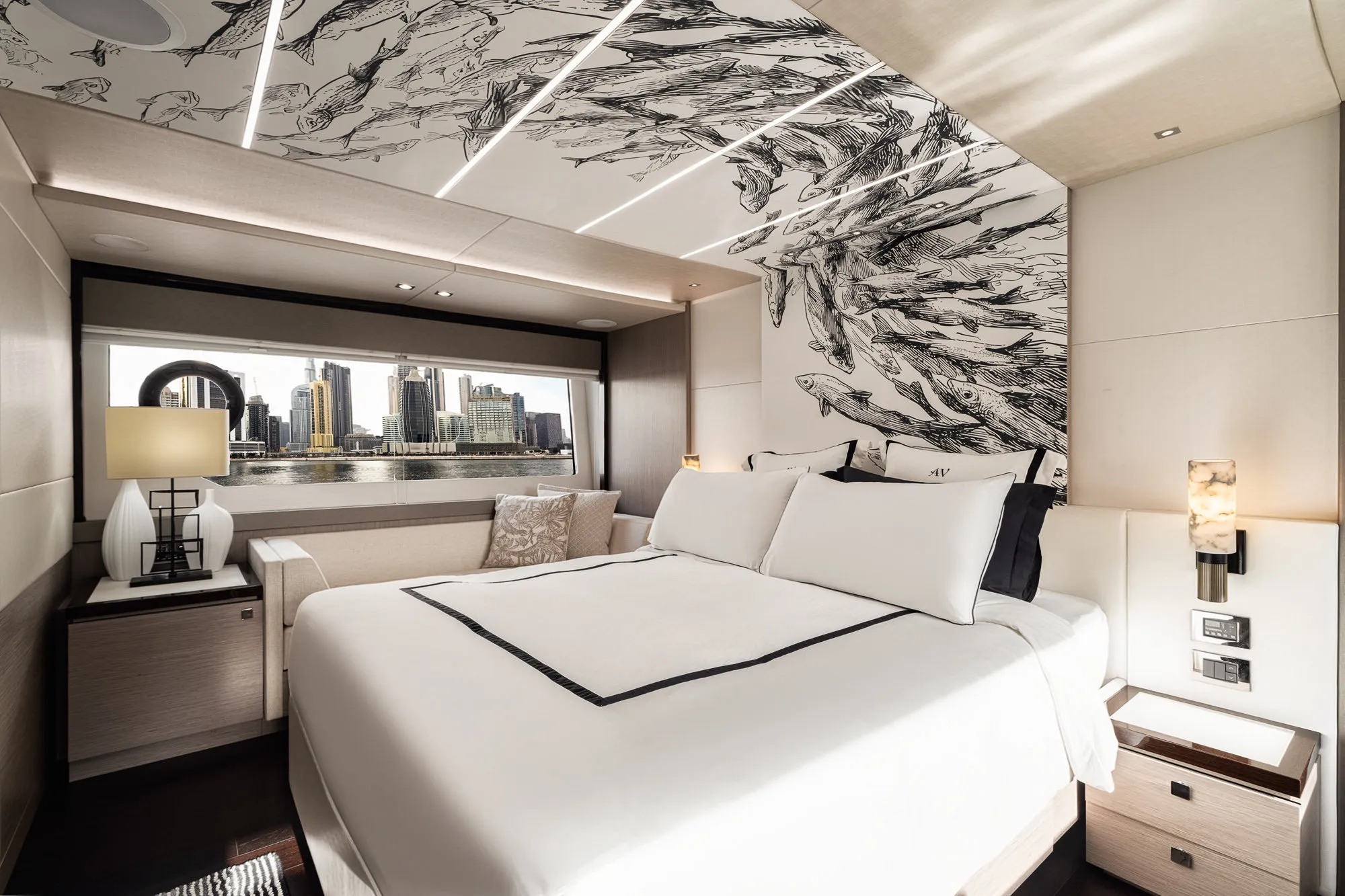
In the world of superyachts, design evolution rarely happens overnight. It shifts quietly — first in the expectations of owners, then in the priorities of shipyards, and finally in the spaces themselves.
Today, that shift is unmistakable.
The era of purely decorative yacht interiors is giving way to something far more sophisticated: environments that are architectural, experiential, and deeply personal. Owners are no longer asking only how a yacht looks at the dock. They are asking how it lives at sea.
Studios such as Maison Azure are among those responding to this new brief, helping to shape what could be described as the next design language of modern yachting.
Rule 01 — Quiet Luxury Replaces Visual Excess
For years, high-gloss finishes and overt opulence dominated yacht interiors. Today’s UHNW owners are moving in the opposite direction.
The new preference is for:
- Soft, architectural palettes
- Matte and honed finishes
- Layered neutrals
- Subtle texture over shine
This “quiet luxury” approach reflects a more mature ownership mindset — one that values longevity and comfort over immediate visual impact.
Designers are responding with interiors that feel more like refined private residences than floating showpieces.
Rule 02 — Residential Warmth Is Non-Negotiable
Perhaps the most important shift is emotional rather than visual: yachts are expected to feel like home.
Owners increasingly request:
- Deeper, more relaxed seating
- Warmer wood tones
- Softer lighting temperatures
- Less formal spatial arrangements
The objective is clear: remove the psychological distance between land and sea.
Leading studios, including Maison Azure, are blending marine precision with residential comfort to create interiors that support longer stays onboard — not just weekend cruising.
Rule 03 — Flow Matters More Than Square Meters
In yacht design, space has always been limited. What has changed is how intelligently that space must now perform.
Modern layouts prioritize:
- Seamless transitions between zones
- Clear sightlines through main living areas
- Flexible social configurations
- Indoor–outdoor continuity
Owners are increasingly sensitive to how a space moves, not just how it photographs.
This has pushed designers toward more architectural planning methods, where circulation and spatial rhythm are treated as primary design tools.
Rule 04 — Wellness Is Moving to the Center of the Yacht
Wellness is no longer an add-on. It is becoming a core design driver.
We are seeing rapid growth in:
- Dedicated spa rooms
- Saunas and steam suites
- Cold plunge features
- Advanced onboard gyms
- Circadian lighting strategies
For many owners, the yacht is now a floating retreat — a place to reset physically and mentally.
Studios with experience in integrated wellness environments are gaining a clear advantage in this space.
Rule 05 — Materials Must Perform, Not Just Impress
Marine environments are unforgiving. Humidity, salt air, vibration, and UV exposure quickly expose purely decorative specifications.
The new standard demands materials that are:
- Weight-conscious
- Moisture-resistant
- Structurally stable
- Easy to maintain
- Tactile yet durable
This is where true yacht expertise becomes visible. The most successful interiors today balance sensory richness with technical discipline — a combination that separates marine specialists from purely residential designers.
Rule 06 — Lighting Is Now Architectural
Lighting has evolved from a finishing layer into a primary spatial tool.
Current best practice includes:
- Layered indirect lighting
- Cove and shadow-gap integration
- Scene-based controls
- Warm-dim strategies
- Night navigation sensitivity
Done correctly, lighting shapes mood, perceived volume, and time-of-day experience onboard.
It is one of the clearest markers of next-generation yacht interiors.
Rule 07 — Personalization Must Feel Effortless
Owners have always wanted bespoke interiors. What has changed is the expectation of how seamlessly that customization is delivered.
Today’s clients expect:
- Fully integrated custom joinery
- Tailored furniture scaled to the vessel
- Curated art and accessories
- Brand-level material consistency
- Invisible technical integration
The goal is not to showcase customization — but to make it feel inevitable.
This is where design studios with strong turnkey capabilities, such as Maison Azure, are increasingly well positioned.
Rule 08 — Refit Thinking Is Influencing New Builds
With refit activity surging globally, many of the smartest design innovations are emerging from refurbishment projects.
Refit-driven thinking has introduced:
- More modular design strategies
- Faster installation methodologies
- Greater respect for service access
- Improved crew circulation
- Smarte weight management
Even new-build projects are now benefiting from lessons learned in the refit world.
Looking Forward
The next generation of yacht interiors will not be defined by extravagance alone. They will be judged by how intelligently they support life at sea — emotionally, technically, and experientially.
Studios that understand this balance are quietly shaping the future of the industry.
For owners, shipyards, and project teams watching the market closely, one thing is clear:
The rules of yacht interior design have changed — and they are not changing back.
Many of the principles described here are visible across Maison Azure’s completed projects
— in the material layering of Solaria, the spatial flow of The Elysian, and the wellness-led
approach of The Seraphine refit. Each project represents a different application of the same
design intelligence.
For owners and project teams seeking the materials that support this shift — from Prodital
Leather to Fendertex, Flexima to Tessilmare — many are available exclusively in the UAE
through Yacht IQ.